
SWFL Insurance

SWFL Insurance

SWFL Insurance Agency. Newsletter September 21, 2015

Timely and Important Topics that can Save Money and Protect Your Wealth        Attention Condo Owners on Fort Myers Beach and Sanibel….We now offer Condo Owners Insurance Policies that include Wind and Flood coverage. These policies provide coverage for “weekly rentals”. Call 239-265-9577 for a comparison premium quote.  We offer very competitive Auto Insurance Premium rates for “Seniors” through the Travelers Insurance Company. Call us at 239-265-9577 or request a quote at www.SWFLAgency.com. It is Hurricane season again….Make sure your Homeowners, Condo Owners and Flood Policies are up date and that the insured values are accurate. Do not assume that everything is fine, have your policies reviewed today. Make sure your “Replacement Cost” has been evaluated. We offer free reviews and premium quotations with no obligation. Dairyland Motorcycle Insurance can Save you Money   !!!!! By Combining Multiple Discounts, Dairyland may be the Best Deal in Florida. Save up to 7% with Dairyland, when your Homeowners policy is provided by SWFL Insurance Agency Rider Group Discounts for Members of HOG, and some 30 additional groups Special Discounts for Military Rider Groups, both active and retired. Flood Facts…To be considered a flood, the water that causes damage must have covered at least two acres or have affected at least one other property. Also, if your home sustains any mold or mildew damage that you could have prevented from occurring, your policy won’t cover such damage. Additional living expenses and business interruption is not covered. Call if you have questions.   239-265-9577 If you have had a Wind Mitigation Inspection of your home, you may be able to create serious premium savings for years to come by having your roof truss to wall metal connection updated by adding nails. Give us a call to discuss. Every home is different. We will need to review your wind mitigation report, so have it handy when you call. Some of our clients have saved as much as $ 1,000. per year on Homeowners premiums. Watch for future Newsletters with new topics of interest. Don’t miss our timely articles on our Blog at www.SWFLAgency.com Call  239-265-9577 for Quick Quotes or visit  www.SWFLAgency.com Providing Auto, Motorcycle, Golf Cart, Home, Condo, Flood, Business Insurance               Health, Medicare and Life Insurance     SWFL Insurance Agency, Inc.               SWFL Insurance Associates, Inc.      Lee County                         8595  College Pkwy, Suite 160, Fort Myers       239-265-9577      Charlotte County             3718   Tamiami Trail, Unit C, Port Charlotte    941-624-3444      Collier County                  2500  Tamiami Trail N. Unit 113, Naples           239-649-4442

SWFL Insurance

Accidental Water Damage…What is covered by My Homeowners Policy?

First let’s look at definitions. A back-up is an accumulation caused by a stoppage in the flow; (Typically not covered) Something prevents the water from continuing down its path The flow is forced to reverse direction and go back the other way. A collapsed drain pipe or blockage can cause a back-up. An overflow is when the water exceeds its boundaries; The space is filled to capacity and water then spreads beyond its limits. A bath tub left running creates an overflow. A discharge is a flowing or issuing out; Water coming from a pipe. A leaking pipe discharges water from the hole in the pipe; It is not a back-up or an overflow. Discharge or Overflow? The Homeowners Form HO3 and HO6 provide coverage for water damage that is the result of a discharge or overflow of a plumbing, heating, air conditioning, or household appliance if it is on the residence premises. This covers pipes that leak behind walls, floors, or ceilings including AC drip pans, washing machines and dishwashers that overflow, toilets or bathtubs that overflow, or storm drains off premises that overflow due to high rains or floods. It is important to note that a sump, sump pump or related equipment, or a roof drain, gutter or downspout or similar equipment is not considered a plumbing system or household appliance. A discharge or overflow caused by a storm drain, water, steam, or sewer pipe is covered as well if it is off the premises. The coverage is for repair of the damaged property—the walls, floors, tiling, and carpet, areas that got saturated and need to be repaired or replaced. Even the tear out of a wall, for example, to get to a leaking pipe is covered. What is not covered is the leaking pipe itself; a pipe leak is often caused by simple wear and tear or age of the system, and that is a maintenance item. However, even if the insured is hanging a picture and pokes a hole in a brand new home and new pipes, the damage to the pipe is not covered. The exclusion for damage to the item causing the loss is all encompassing, and has no exceptions. The policy specifically excludes water that backs-up through sewers or drains, overflows from sumps, sump pumps, or related equipment. But wait…….. this is where a lot of losses occur. To provide coverage for this occurrence there is the Water Back-up and Sump Discharge or Overflow endorsement, HO 04 95. This provides $5,000 of coverage for back up through a sewer or drain or Overflow or discharge of a sump, sump pump or related equipment, Even if the equipment suffers a mechanical breakdown. This coverage does not, however, increase the limits of liability for coverage A, B, C, or D in the homeowners’ policy. This takes the problem of defining back-up or overflow out of the equation of certain losses, since the endorsement provides the coverage that is excluded in the main policy itself. Make sure to ask for this coverage to be added to your Homeowners Policy. Call SWFL Insurance Agency at 239-265-9577 for a full review of your present coverage and a competitive quote. Note: Damage caused by repeated leakage of water, such as rot, fungi, mold, deterioration are covered under a specific peril with conditions. See Fungi, Mold.

SWFL Insurance

Merry Christmas….and your kids got a “Barbie Jeep”, a Motorized Scooter and an ATV. Will your Homeowners Policy cover you when they run over the neighbor’s dog or kid?

Miniature Recreational Vehicles (a.k.a. Barbie Jeeps) are typically excluded from the Liability coverage section of your Homeowners Insurance Policy. Some Homeowner Policies will provide Liability coverage, but only while the vehicle is on the “insured premises”, and meets certain specs for age of rider and speed. When taken off of your property, coverage ceases. It’s okay – you can laugh now. I did too. Why is this important you may be thinking? Well, there have been enough claims involving miniature recreational vehicles that it is listed in The Insurance Journal as a “major policy gap”. Even if you do not own one, but maybe the neighbor kid does and brings the vehicle onto your premises, so it is still important for you to know how a liability claim involving one of these miniature vehicles would work. Let me explain this coverage gap in more detail. People with young children are likely to have a miniature recreational vehicle – a “Barbie Jeep” or some battery-powered vehicle used to cruise the driveway and sometimes the street, with their friends. As long as the children are on the “insured location”, liability coverage is extended from the homeowners’ policy for any bodily injury or property damage the children cause. This little vehicle races along at about 10+ miles an hour and could really do some damage if the child ran over the neighbors or their children. If sued for these injuries, not to mention the parental “emotional distress” suit that would certainly accompany it. The number of claims has caused most Homeowner Policy Carriers to include language that either excludes coverage for such miniature vehicles or sets conditions such as “on insured premises”. The gas and electric motorized “scooter”, ATV and Dirt Bike will typically fall into this same category. The policy language will govern your particular situation. Read your Policy! If your Insurance Agent has not discussed this “gap” with you, give us a call for a full review of your liability exposures and how your present policy will respond. Call 239-265-9577. SWFL Insurance Agency, Inc. www.SWFLAgency.com

SWFL Insurance

You SUCK: Your teenagers most recent Tweet could get you sued……

Have you ever gotten into an argument with someone and called them something in public not exactly suitable for printing? What about the neighborhood rumor mill, ever passed along a juicy piece of information without first checking the facts? What about inflammatory posts on Facebook? These are examples of “personal injury” as defined in insurance terms. Libel, slander and defamation of character are the best known of the “personal injury” offenses. The Internet has upped the ante on the need for personal injury protection. Posting an opinion to a website, Tweeting, blogging about an individual or business or simply forwarding a damaging email could result in a personal injury suit. The problem is personal injury is not covered in the unendorsed homeowners’ policy. An endorsement is required to gain the needed protection. Personal injury protection is garnered by attachment of the HO 24 82 (or equivalent state-specific or proprietary) endorsement. Coverage is not limited to libel, slander and defamation of character, but is also extended to any offense commonly considered personal injury (in insurance terms) including: invasion of privacy, wrongful entry into or wrongful eviction from a premises (all three could be useful if the insured is a lessor or landlord), false arrest, false imprisonment or malicious prosecution. How important is personal injury protection? In January 2008, a real estate developer sued a blogger for $25 million because of something he said on his blog. The number of claims and lawsuits are on the rise. People seem to be easily offended and more than willing to air their “hurt” feelings in court; most clients will readily admit this to be true. Kids can be cruel and many times they do not totally understand the consequences of their actions. Adding Personal Injury Liability Protection to your Homeowners is as simple as a phone call. The annual premium costs vary from $15. To $25. for $ 300,000. Remember that when you purchase Liability Insurance, you are purchasing a legal defense team as well as funds to pay damages. SWFL Insurance Agency, Inc. represents many fine Homeowners Insurance Carriers. Let us review your present policy for any coverage gaps and provide you with a competitive premium proposal. Call 239-265-9577 or request a quote at www.SWFLAgency.com

SWFL Insurance

A Great Homeowners Theft Prevention Guide

In today’s world, preparing for the possible burglary at your Home is very important. Take a look at this Theft Prevention Guide provided by Security First Insurance. Take a minute to assess your home and determine what you can do to be prepared. Do not become the next victim. Are you receiving the proper premium credits on your Homeowners Policy. Let us review your policy and offer a competitive quote. Call 239-265-9577 or Request a Quote from this page.

SWFL Insurance

Yacht, Boat Insurance and the Total Loss

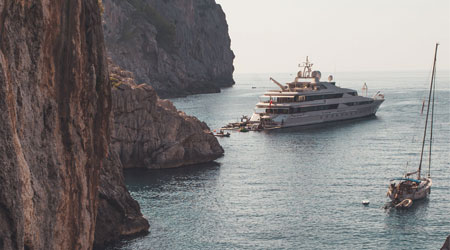
In the event of a total loss, your boat insurance policy may pay you based on the Agreed Value, Actual Cash Value or the Replacement Cost Value. In explaining how these three policy forms are different, I will use a three-year-old boat, insured for $40,000 which was destroyed by fire. Agreed Value Agreed Value is easy. You and the insurance company agree on the value of the boat before the loss. Using our example, you would be paid $40,000. If the current value of the boat at the time of the loss is $20,000 or $55,000, you would be paid $40,000, the Agreed Value of the boat. Actual Cash Value Actual Cash Value is the value of the boat at the time of the loss. A boat insurance company will pay the insured value or the Actual Cash Value of the boat at the time of the loss, whichever is lower. In our example, if the Actual Cash Value of the boat is $25,000, this is the most you will be paid. If the Actual Cash Value is $55,000, then you would be paid the insured value of $40,000. The Actual Cash Value is determined by the insurance company from sources such as a used boat price guide and other boats listed for sale. Replacement Cost The newest option is Replacement Cost. A Replacement Cost policy agrees to replace your boat with a new boat. You are required to purchase this coverage when the vessel is new and the coverage is only available until the vessel is two or three years old. Our $40,000 three year old boat has a Replacement Cost new today of $45,000. The Replacement Cost policy would pay $45,000 for a new boat. Some policies may specifically state they will pay a percentage over the amount the vessel is insured for, 20% for example. Once the boat reaches the age where replacement cost is no longer available, the policy form will be changed to Agreed Value or Actual Cash Value. We know boats..let us find the best policy for you..We will shop and compare coverage Call 239-265-9577 or Email Info@SWFLAgency.com www.SWFLAgency.com

SWFL Insurance

Umbrella or Excess Liability 101

What is Excess Liability or Umbrella Liability Coverage ? Available in amounts ranging from one to five million dollars, excess liability coverage increases your personal liability limits by adding protection to your current auto, boat or homeowners policies. Also, if something is not covered in your homeowners policy (like libel), and it’s not specifically excluded in the excess liability policy, you’re covered. Coverage provided Excess liability coverage provides: Protection for covered claims by others for personal injury or property damage caused by you, members of your family/household, or hazards on your property for which you are legally liable Personal liability coverage for occurrences on or off your premises An additional layer of protection above your primary auto policy against auto-related liabilities Protection against non-business related personal injury liabilities such as slander, libel, wrongful eviction or false arrest Legal defense costs for a covered loss. Lawyer fees and associated court costs are covered Worldwide coverage- no matter where you go, with the only exception being situations involving foreign ownership of dwellings or cars How it works Depending on the type of accident, your homeowners, auto or boat policy liability limits are used up first, then the excess liability policy covers all remaining costs (up to the amounts of coverage you purchased). For example, if your neighbor dove into your swimming pool and broke his neck, your homeowners liability coverage would pay for the first $100,000 in damages. Your excess liability policy would cover the rest (including associated legal fees) up to the one million dollar policy amount that you had purchased. Most companies require that you carry certain limits on your primary insurance policies (homeowners, auto and boat) in order to receive excess liability coverage. For example, a company may require the following primary liability limits: $100,000 for homeowners, $250,000 per person/$500,000 per accident for auto and $300,000 for boat/yacht coverage. Some definitions Insurance products tend to get loaded down with legal-sounding jargon, especially a product that specifically deals with circumstances for which you are legally responsible. Therefore, a few common definitions might help clear up any confusion: Personal Liability: Coverage for damages that you are legally liable (responsible) for. This includes incidents occurring at your home and/or caused by you, residents of your household or your pets. Here are some common examples: your dog bites someone, a guest falls down your front steps, your teenage son rough-houses with his buddy and accidentally breaks that friend’s leg! Personal Injury: This all-inclusive definition covers many predicaments. Personal injury can take many forms, including: bodily injury, shock, emotional distress, mental anguish, sickness or disease, or death arising from any of the above. Personal injury also means false arrest, detention or imprisonment, malicious prosecution, wrongful entry or eviction, humiliation, libel or slander, defamation of character or invasion of privacy. Property Damage: Accidental damage to the property of others caused by you, residents of your household, or your pets. Exclusions Often, insurance policies are defined not by what they cover, but by what they don’t. This is especially true for excess liability products. If something is not specifically excluded, you’re covered. Exclusions vary widely by company. Here are some common exclusions: damages expected or intended by insured. damages arising out of business or professional pursuits. liability assumed under contract or agreement. liability arising out of ownership, maintenance, use, loading or unloading of aircraft. liability arising out of ownership, maintenance or use of non-traditional watercraft such as jet skis, air boats or air cushions. liability arising out of ownership, maintenance or use of most recreational vehicles. Only snowmobiles and golf carts are covered. damages to property you take care of, own or use. damages covered under a Workman’s Compensation policy. liability arising out of war or insurrection. Speak with an independent insurance agent at SWFL Insurance Agency, inc. to determine your specific risk factors and learn more about how to protect your current and future assets. We have Umbrella liability Policies starting at $ 250. Annually. Call us at 239-265-9577 or Email Info@SWFLAgency.com

SWFL Insurance

The Boat and Yacht Insurance Policy ….How they Pay differs widely by Company

When discussing insured value and how a boat insurance policy will pay, most people think about a total loss. This is important but the majority of claims are partial losses. Depending on how your policy responds could cost you several thousand dollars above your deductible. A boat insurance policy has two different ways to pay in the event of a partial loss. One is to replace the damaged items new for old without deducting for depreciation. The second is to depreciate the damaged items in the event of a loss. Depreciated Value is defined as Replacement Cost less depreciation. Most boat insurance companies use a non published depreciation schedule that applies to partial losses. An example may be 7% depreciation per year on a stern drive or 15% depreciation per year on canvas. You will want a policy that pays replacement cost for a partial loss when available. Each insurance company will apply Replacement Cost and Depreciated Value differently. Read your policy carefully. Some boat insurance companies do not provide replacement cost coverage for partial losses. If the boat is insured on this policy form, then no matter the type of loss, the replacement parts are subject to depreciation. If the part costs $2,000 and is subject to 20% depreciation, you would be paid $2,000, less $400 depreciation, less your deductible. Some boat insurance companies provide replacement cost for partial losses until the boat reaches a certain age. The age will vary with each insurance company. Once a boat reaches that age, all partial losses are settled on an actual cash value. Most boat insurance companies that provide replacement cost for partial losses name specific items that are subject to depreciation. Canvas, sails, cloth, trailers, and plastics are examples of specifically named items. These items generally have a limited life span. They also specifically name items to be depreciated based on the item’s age. Outboards, stern drives and internal machinery are examples of items that change from replacement cost to depreciated value based on their age. Each insurance company has different specifically named items and different ages when items change from replacement cost to actual cash value. Review the specifics of your policy for details. Replacement Cost for a partial loss is what you want when available. A depreciated value can cost you several thousand dollars. Below are examples to help explain how replacement cost vs. depreciated value work. Example 1 is an 11 year old boat with a $250 hull deductible that hits a submerged object. The replacement cost of the damage to the prop, shaft and strut is $5000. Insurance company A provides replacement cost coverage until the vessel is three years old. The damaged prop, shaft and strut are 11 years old and subject to depreciation. Insurance company A will deduct 50% depreciation or $2500 from the $5000 replacement cost. You would be paid $2,250 ($5,000 replacement cost, less $2,500 depreciation, less your $250 deductible). Insurance company B provides replacement cost coverage with specific named items subject to depreciation. The prop, shaft and strut are not specifically named items and are therefore settled on a replacement cost. Insurance company B would pay $4750 ($5000 less your $250 deductible). Example 2 is an 8 year old stern drive boat with a $500 hull deductible that hits a submerged object. The replacement cost to the stern drive is $8000. Insurance company A provides replacement cost coverage until the stern drive is six years old. They will apply 60% depreciation (7.5% per year) to the $8000 replacement drive and then apply the $500 deductible. Insurance company A will pay $2700 ($8,000 less $4,800 depreciation, less $500 hull deductible). Insurance company B provides replacement cost coverage until the stern drive is 10 years of age. They will pay $7500 ($8000 less the $500 hull deductible). Example 3 is a boat with a $500 hull deductible that suffers wind damage to the fly bridge enclosure. The fly bridge enclosure is 2 years old and the replacement cost is $5000. Insurance company A provides replacement cost until the fly bridge enclosure is three years old. They will pay $4,500 ($5,000 less the $500 hull deductible). Insurance company B provides replacement cost but specifically names canvas as a depreciated item. Insurance company B will apply 20 percent depreciation to the replacement cost. They will pay $3,500 ($5000 replacement cost, less $1,000 depreciation, less the $500 hull deductible). There are other items to consider. For example, if the stern drive has to be replaced, most companies will apply a reduced depreciation if you agree to a remanufactured stern drive. This can save thousands of dollars in depreciation. We represent one insurance company that applies no depreciation for a remanufactured unit. Also, depreciation is only applied to parts (real property). Depreciation is not applied to labor, storage charges and other non real property items. In the case of a Total Loss, please review this article Yacht Boat Insurance and the Total Loss We know boats..let us find the best policy for you..We will shop and compare coverage Call 239-265-9577 or Email info@swflagency.com www.SWFLAgency.com

SWFL Insurance

The Third Nail – The reason your Homeowners Premiums increased without warning!

The Lack of a Third Nail could cause your Homeowners Premiums to increase without warning! Due to changes in the 2012 Florida Wind Mitigation form (OIR-B1-1802. Rev. 01/12), Homeowners insurance windstorm premium credits for homes having clips or straps with less than Three Nails for the roof truss to wall connection is not allowed. The previous Wind Mit form allowed credits for metal connectors with nails. For Homes constructed before 2002, you should contact us for a review of your Wind Mit form and Homeowners Policy. We will determine if you are receiving the proper credits and provide you with our best premium proposal. We have construction, wind mitigation and home inspection experience and are able to provide up to date information. If we determine that you can benefit from adding the “Third Nail”, We will determine your estimated Homeowners premiums savings. We will recommend a couple of licensed contractors to contact who can complete the required work. Typically the cost of adding the Third Nail for a 2500 SF home is about $ 800., one time. The typical windstorm premium savings is $ 600. to $ 1,000. every year going forward for this home. Typically, a new Wind Mit form is completed and included with the contractor’s work. Homes built prior to 1960 typically do not have metal straps or clips. Many times these homes can be retro fitted to install the metal connectors and nails required by the building code. Call us about a free evaluation. Call SWFL Insurance Agency today 239-265-9577. We will help you save money! Email us at Joshw@SWFLAgency.com

SWFL Insurance

Scary Drivers……..How to Handle Road Rage

If you find that you have agitated another driver, whether the fault is truly yours or not, don’t react to or retaliate against the other driver on the road, according to SafeMotorist.com. Engaging with the other driver will only cause the situation to escalate. Remind yourself that the other driver is just bad at handling stress, avoid eye contact and continue to practice safe driving habits. All you can do is be a considerate, aware driver who follows the rules of the road. While it may be difficult in the heat of the moment, don’t give in to feelings of anger or rage on the road. Think twice before you honk the horn or flip that finger, because you never know what may set off the person in the cars around you. Getting home or to work safely is more important than teaching someone a dangerous lesson. Police say if you are involved in a road rage incident, stay in your car and call for help. If you can, drive to a well-lit area with people or to a local police or fire station. Ways to avoid road rage encounters Here are some additional pointers to help avoid road rage encounters: Don’t assume other drivers are evil. Sometimes, people make mistakes, or they might be driving more slowly for a reason. Do not assume that they are driving slowly just to annoy you. Put yourself in the other driver’s shoes. Don’t honk your horn insistently. It might make you feel better, but it’s really kind of silly. And when everyone does it in a traffic jam, it’s really annoying and increases everyone’s stress level. If someone is tailgating you, don’t aggravate yourself and the other driver by playing cat and mouse with your speed. Move out of the way and let the other driver pass you. Cranks some tunes, not the engine. Instead of listening to your own muttering, try listening to music as it can help keep you calm. Leave space to pull around the car in front of you. This seems simple, but in heavy traffic, people tend to drive bumper-to-bumper. Leaving some wiggle room can reduce vulnerability if the driver in front of you gets aggressive.Allow at least a two-second space between your vehicle and the one ahead of you. Try not to run late. When you’re in a hurry, your patience is short, and you’re much more likely to become aggravated. Try to give yourself a few extra minutes to get where you need to go. Avoid cutting other drivers off in traffic. Signal several hundred feet before you change lanes or make a turn. Avoid making any gestures or eye contact with another driver. Be courteous in the use of high-beam headlights. Obey speed limits. Drive in the right or middle lane; pass on the left. Stop at stop signs and red lights; don’t run yellow lights. Don’t block intersections. Report any aggressive driving incidents to the police immediately. Important note: Police and safety officials say drivers snapping pictures or videos of others is unsafe and could lead to dangerous road-rage incidents. If you are prone to road rage Get sufficient rest. Lack of sleep leads to loss of control. Limit alcohol Alcohol can make you rageful, not to mention impair your driving in other ways. Play soothing music. This can really help. Be aware of your driving. Leon James, PhD, professor of psychology at the University of Hawaii and author of Road Rage and Aggressive Driving: Steering Clear of Highway Warfare, recommends watching yourself—what makes you angry, how long do you stay angry. Tell yourself, “It was not their fault—it was the guy in front of them.” Put pictures of your loved ones on the dashboard. You want to come home to them. Remember, this behavior can cost you in more ways than one. Road rage can have a high price tag even if no one is hurt or killed: tickets, lawyers, court costs, damage to vehicles, and higher insurance rates. Don’t engage other drivers Avoid engaging other drivers, even if they have done something to make you angry or vice versa. Put as much distance between you and the other driver as possible and avoid making eye contact. Never pull off a roadway to confront another driver. Keep your doors locked and give yourself room at intersections to drive away. If possible, take down the license plate number of the vehicle and report the driver’s behavior to police so they won’t hurt themselves or someone else. Taken from By Jayleen R. Heft, PropertyCasualty360.com

Scroll to Top